How to increase engagement in a multi-generational workforce
In many ways, the events we have lived through shape us as people. Wars and political movements, social issues and revolutions, technological transformations – these occurrences have a profound impact on how we view the world, each other and the workplace.
More than five generations of workers make up today’s workforce, and each generation has their own unique view of what work should be.
Ensuring employees from all different generations are engaged is a top priority for many organisations - Deloitte found the employee experience is a top concern to nearly 80% of business executives – but the problem lies in the fact that appealing to workers from five different age groups is by no means a straight and narrow path to follow.
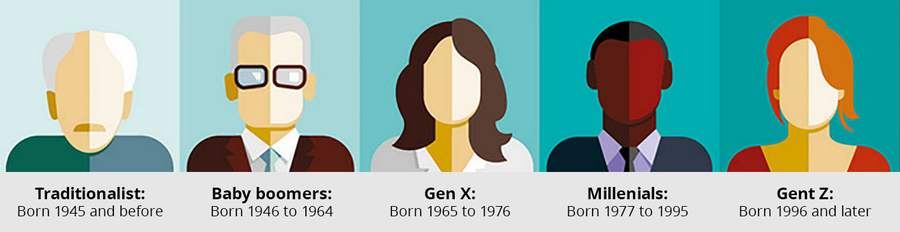
Here’s how organisations can engage workers from all different age brackets:
Accept Individuality to Boost Engagement in a Multi-Generational Workforce
There are certain stereotypical personality traits that dominate each generation of workers. For instance, millennials are intrinsically restless, with a strong desire to undergo new experiences and pick up new skills; Gen X are fiercely independent with a self-starter attitude; Baby Boomers want big wins - and they want to be acknowledged for them. But making changes to your organisation based on the stereotypical demands of different generations is a dangerous game to play.
By the year 2025, three quarters of the global workforce will be made up of workers born in or after 1983, according to Deloitte. So, when the subject of employee engagement comes up, millennials tend to take the spotlight. But does that mean your organisation should cater solely to millennial workers? Certainly not. (Providing staff with the latest laptops, smartphones, and a breakout space with a foosball table will have very little impact on your overall employee engagement levels.)
Your company culture runs deeper than that. Everyone is different - some people from Gen Z would be far more inclined to pick up a book than a smartphone, while some traditionalists might know more about coding than their children (or grandchildren).
Rather than relying on stereotypes, focus on the individual members of your organisation and their personal preferences, values and beliefs - and create an environment where people from all backgrounds and preferences are catered for.
Build a Fluid Culture to Enhance Engagement in a Multi-Generational Workforce
Traditional workplace structures with complex tiers and ladders often leave employees feeling siloed and undervalued. That’s why a growing number of organisations are investing in flatter work structures.
But it’s also worth bearing in mind how your organisation can adapt its processes, procedures and routines in a way that encourages collaboration, builds cross-functional thinking and inspires the free-flow of ideas.
Giving employees from all generations the chance to pick up new skills and experiences that are aligned with their own interests, rather than the traditional boundaries of their job functions, means they will learn from one another and grow as a team – which, in turn, will boost employee engagement across the board. Younger workers will be able to learn and develop their skills; senior-level workers will get a much better feel for how things work on the shop floor.
Implement Reverse-Mentoring Programs for a Multi-Generational Workforce
In the majority of cases, workplace mentoring means older, more experienced professionals passing down their years of knowledge and insights to employees at either a management or junior level. While this still has a home in the modern workplace, the rapid growth in today’s technology has resulted in many older workers being left out of the technological loop.
Pair younger, tech-savvy individuals up with more experienced employees that are struggling to adopt new technologies. Many older workers want to pick up these skills – they just don’t know where to start. A reverse-mentoring programme could see them doing anything from updating and maintaining their LinkedIn profiles through to tracking a campaign’s online performance through Google Analytics.
This makes business sense. Mature workers will pick up new technical capabilities that’ll improve their performance, and younger workers will continue to benefit from the knowledge and insights older workers have to offer.
Introduce Technology Thoughtfully to Support Engagement in a Multi-Generational Workforce
In today’s ever-changing business environment, nothing is guaranteed to stay the same. That’s why your organisation needs agile and adaptable people that are able to pick up new skills, regardless of the age bracket they fall under.
Look for people that have a willingness to learn, enjoy collaborating with others, and have a mindset that aligns with your company culture.
But that being said, don’t go about introducing new software, systems or solutions with the expectation that everyone will pick it up seamlessly. In fact, think very carefully about why you are introducing it in the first place, and how it will impact people’s day-to-day job functions.
New technologies have the potential to improve employee productivity, but remember: a high-performing organisation often comes down to its people and culture, not its technology.
Focus on your people - they’re your most important and unique asset – technology should support and engage them, not hinder their performance. Remember the predictions from the 1980s that pushed the idea of a paperless society where everyone worked remotely? Sometimes workplace trends are nothing more than, well, trends.
Communicate with Purpose
In order for employees from all different generations to truly engage with your organisation, it’s vital that you devise and share your organisation’s purpose. In the majority of cases, vision and value statements often hold very little significance for employees, but being able to answer why your organisation exists (its purpose) will encourage employees from all different backgrounds and age groups to become invested on an emotional level.
A simple and straight-forward purpose statement that states the reason why you exist is your chance to form a genuine connection with people. Communicate your purpose with employees and explain how it impacts your organisation’s objectives, decisions and results.
It’s also worthwhile to take a transparent and honest approach when communicating from the top down. Encourage your leaders to actively and openly share where your organisation is heading, how it is performing, and the key challenges and obstacles that lay ahead – this will keep employees feeling engaged and driven.
While engaging five different generations of workers at once is no easy feat to master, having an honest and authentic company culture and purpose will transcend above any technological trend or new idea. Focus on your people first, give them the opportunity to grow and develop, and communicate internal messages with clarity – and your workforce will be more engaged and productive than ever.
| Content type | Articles |
| Country | - Belgium
- France
- Germany
- Luxembourg
- Poland
- Spain
- Switzerland
- United Kingdom
- Canada
- Mexico
- United States
- Africa & Middle East
- Hong Kong
- Mainland China
- Malaysia
- Singapore
- Taiwan
- Thailand
|